
Welcome to
MamaAI
An Antenatal Insight Pregnancy Companion System

MamaAI brings together essential pregnancy tools in one platform to help mothers manage health records, learn about fetal development, get pregnancy-related guidance, and monitor baby movements.
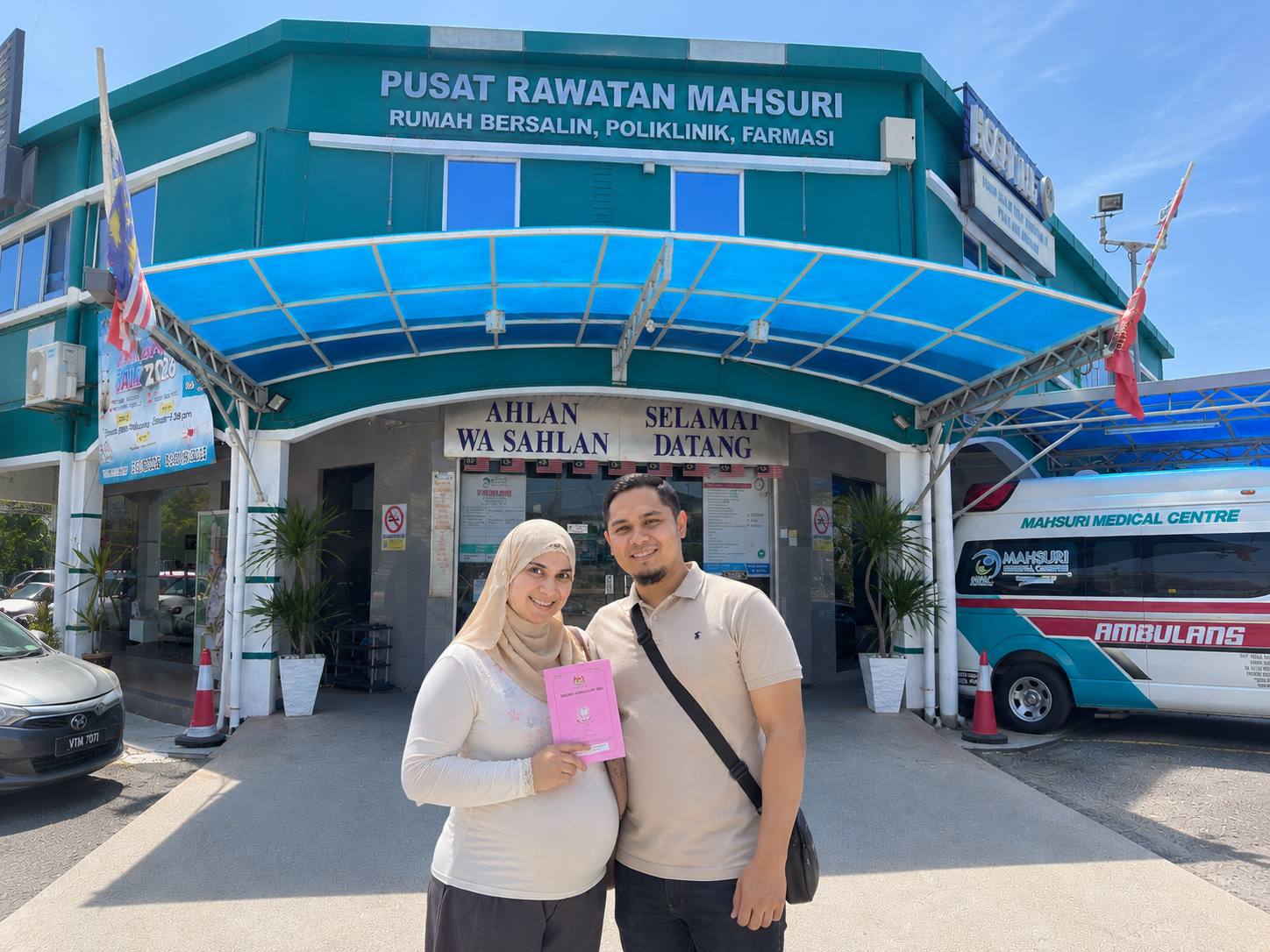
Securely store and manage maternal health records, appointments, check-up information, and important pregnancy dates in one place.
Learn more
Explore 3D fetal development videos to understand how your baby grows and develops throughout each stage of pregnancy.
Learn more
Get instant pregnancy-related guidance on common symptoms, nutrition, antenatal care, and baby care through an AI-powered chatbot.
Learn moreRecord and monitor your baby's daily movements to help mothers keep track of fetal activity throughout pregnancy.
Learn more Clinic-informed care

No more loose paper slips — weight, BP, HB & glucose, backed up automatically.
Everything here mirrors what's written by hand in your official Buku Pink — MamaAI is a digital backup, not a replacement.

Fetal development explained simply, plus a chatbot for questions that can't wait.
From Cleveland Clinic to Sunway Medical Centre, hospital sites publish good articles — but none let a mother keep her own running record or ask a question at 2am. MamaAI is built to sit alongside those resources, not replace your clinic.
Tap or hover any card to compare with hospital info sites.


Enter the first day of your last menstrual period (LMP) below to estimate your due date and gestational age. No account needed to use this calculator.
Calculated by adding 280 days (40 weeks) to the first day of your last menstrual period, assuming a 28-day cycle with ovulation at the midpoint. Your clinic may refine this using early ultrasound measurements.
It's a helpful target, not a guarantee — only about 5% of babies are born on their exact due date. Most healthy pregnancies deliver between 37 and 42 weeks.
Yes — your due date may be adjusted in the first trimester once ultrasound measurements give a more precise view of your baby's growth than the calendar alone.
General nutrition guidance for pregnant mothers and mothers in the confinement period after birth. This is not a substitute for advice from a dietitian or doctor — adjust to your own health condition.
Nutritional needs shift by trimester — early pregnancy focuses on folate (prevents neural tube defects), while the middle and later stages focus on iron, calcium and protein for rapid fetal growth.
*Protein servings increase by trimester (3.5–7 servings a day). Source: KKM & Pantai Hospital guidelines.

Click a card below to see the photo & why each food matters:
The confinement period (usually 30–44 days after birth) focuses on warm, easy-to-digest food that supports recovery, wound healing, and steady breastfeeding. Confinement practices vary by family & ethnicity — this guide is general only.

Click a card below to see the photo & why each food matters:
Unstable emotions after childbirth are common, but don't wait for it to "get better on its own" if these signs are strong or ongoing. This information is shown openly to all mothers — even without logging in.

Examples: wanting to harm herself, wanting to harm the baby, severe confusion, seeing/hearing things others don't, not sleeping for days, extreme aggression, or the family feels the mother/baby is unsafe. Don't leave the mother alone with the baby — go straight to the nearest government/private hospital Emergency Department or call 999 (KKM, police, fire and civil defence).
Talian Kasih — call 15999, operating 24 hours.
Or WhatsApp 019-261 5999. Operating 24 hours, 7 days a week — counselling, protection assistance and welfare support.
Befrienders KL — 24-hour emotional support, free and confidential.
Talian HEAL — counselling support and mental health crisis line.
Operating every day including public holidays, 8:00am to 12:00am (midnight).
Go to the clinic where you have your postnatal check-up.
Tell the nurse/doctor if you feel emotionally unstable, tearful, angry, unable to sleep, fearful, or have thoughts of harming yourself/baby — they can screen you and refer you to a Psychiatrist / Hospital if needed.
Click the sign you're experiencing to get the number you should call right away. KKM lists "recently given birth" as one of the factors that can trigger depression.
—
 ×

Clinic-informed, not clinic-replacing — every tool in MamaAI supports what your doctor already tracks in your Pink Book.
MamaAI
An Antenatal Insight Pregnancy Companion System. Prototype for the DIT project proposal.